
Bermuda Triangle

The Bermuda Triangle. Everyone’s heard of it, everyone knows its reputation. A mysterious section of ocean that has a penchant for swallowing ships and aircraft alike in its insatiable hunger. Unexplainable disappearances are on the menu every day at the Triangle, and by golly the Atlantic Ocean is ready to deliver.

But how many of the terrifying rumors that surround this three-pointed enigma are true? For how long have these supernatural events been going on? Can modern science finally explain the legend of the deep?

Well yes it can, and studying up on this phenomenon was quite interesting for me. Like most people, I’ve heard tales of the Bermuda Triangle ever since I was little, but other than their increasing my desire to never get on a boat in waters deeper than my local pool I didn’t pay much attention to them. However, recently I decided to do some diving into the lore surrounding the zone and see what today’s maritime opinion on it is.

The first thing to explain is the geography, and with it, the first known mention of the Bermuda Triangle in print. Its apparently unusual effects and rough dimensions were laid out by a reporter for the Miami Herald in 1950. In the article he wrote he made many claims, among continuous mocking of the modern-day belief of a “small world,” of several unexplained disappearances of commercial ships and airlines within the boundaries of Bermuda, Puerto Rico, and Miami. 

Bermuda Triangle Original Map
Original E. V. W. Jones map published with the Miami Herald article “Sea’s Puzzles Still Baffle Men In Pushbutton Age”

In this map we can see the lines that would form the boundary of the Triangle. Though Edward Van Winkle Jones (who had really mean, folk-tale loving parents apparently) never actually gave it the name “Bermuda Triangle,” his article clearly inspired all the writers and sensationalists who came after, reveling in the sense of mystery and terror exuded by this patch of ocean. It’s a pretty entertaining piece as well, and short. Really instills a little bit of fear in you and I bet it made more than a couple people rethink their travel plans that year. But let’s be honest, I doubt any travel over thousands of miles of ocean was safe in the ’50s. Between the choice of a Douglas DC-3 or a rusty bucket more prone to sinking than the Titanic I would probably gladly pick a raft built out of rocks by the Flintstones.

Knowing where the three vertices of this area of doom lie is only half the story though. We want to hear more about these disappearances. If there really has been a disproportionate number of flights and fleets gone without a trace, then perhaps there really is something to these rumors after all.

The actual phrase “Bermuda Triangle” was coined in 1964 by William Gaddis in his article “The Deadly Bermuda Triangle“, written for a popular pulp fiction magazine. Obviously his job was to sensationalize the already bizarre rumors so I certainly took his claims with a grain of salt. The article reads like a Lovecraftian tale of intrigue, with fanciful lines and grand claims like “The mysterious menace that haunts the Atlantic off our southeastern coast had claimed two more victims. Before this article reaches print, it may strike again” and “During the past two decades alone, this sea mystery at our back door has claimed almost 1,000 lives.” If E. V. W. Jones made the place sound scary, Gaddis makes it sound like the gates of Hell are waiting in the ocean to swallow you up.

Despite his hamming up the dangers of the Devil’s Triangle, as it is also known, he still brings up some fairly well-documented accounts of strange disappearances that to this day remain unexplained. The vanishing of Flight 19, a group of five bombers embarked on a routine training mission in 1945, is probably the most famous and often referenced mystery tied to the Triangle. Long story short, these planes were practicing flying with certain navigational restrictions that required the airmen to rely more on visuals than mechanical instruments.

Flight 19
Flight 19 artist’s depiction. Source: Wikipedia

Though the exercise was supposed to be short and take place off the coast of Florida and the Bahamas, some kind of navigation failure resulted in the planes losing all sense of direction and resulted in their eventual crash landing into the ocean some several hundred miles above their intended operating area. Because no wreckage or bodies were ever recovered, the fact that a rescue plane sent out after them also disappeared, and strange reports by the pilots stating that they were receiving unusual compass readings, those who read about the story could only chalk it up to supernatural events. Though an investigation launched by the navy turned up nothing substantial, it was determined that the flight leader had misidentified the Florida Keys and turned the flight in a direction that he thought was towards the mainland, but was in fact farther out to sea.

Another tragic disappearance happened in 1918 to the USS Cyclops and its crew of approximately 300. A cargo ship, the Cyclops was carrying ore from Brazil to Maryland on a non-stop journey. Interestingly, it made an unscheduled stop in Barbados after the ship seemed to be overloaded and too close to the maximum acceptable water line. After departing Barbados it would have had a course set to pass directly through the Bermuda Triangle before reaching its final destination, but neither the ship nor a single member of the crew was ever seen again.

Of course this event can be attributed to structural, mechanical, or navigational failure as well, though proof is impossible to find thanks to the lack of any trace of evidence. Once again this led to wild speculation. Perhaps this area of the ocean was possessed, somehow inherently more dangerous than every other part of ocean covering the planet. This immediately brought the question to my mind: Is the rate of disappearances and wrecks greater than that found elsewhere?

To answer this, I turned to Google. Unfortunately I couldn’t find any hard numbers as to the ratio of Triangle disappearances to disappearances in similarly-sized areas worldwide, but I did turn up several articles that claimed there was no greater amount of missing flights and ships than anywhere else. However, I demand facts. In lieu of facts, I searched for official government statements. The National Oceanic and Atmospheric Administration seemed like a good place to go, and there I went. They maintain that weather and human error are the cause of most issues in the Triangle, like pretty much anywhere else in the world. “The majority of Atlantic tropical storms and hurricanes pass through the Bermuda Triangle” they say, as well as pointing out that a large number of small islands in the area can cause unusually shallow areas for ships to run aground on. Poor navigation would have been par for the course in the early 20th century. No wreckage appearing is not unusual, as sometimes boats and planes sink completely to the bottom of the ocean, along with their crew and cargo. With an area estimated to be in the ballpark of 1,000,000 square miles, the Triangle encompasses so much ocean that it’s only to be expected that such a high traffic area would have lots of wrecks. I would imagine other common shipping routes also are just as dangerous, an assertion also backed up by myriad semi-reputable articles.

In the end, no government organization or scientific journal backs up the existence of the Bermuda Triangle and its reputation. Only in pulp fiction and clickbait articles will you find people taking the supernatural threat seriously. While it is entertaining to read these spooky stories, they remain just that: tall tales told to terrify and sell cheap magazines. The wrecks and disappearances may have a foundation in truth but are often quickly blown out of proportion and embellished. 

Regardless, it’s all fascinating stuff. I think everyone has an inherent interest in the unknown, which is why stories like the Bermuda Triangle are so interesting. We kind of want to believe in powers beyond our control, shiver at scary stories, and think that maybe the world is more interesting and inexplicable than scientists would have us believe. The truth is sometimes just as interesting though, and it was definitely cool for me to finally learn the truth behind this long-standing legend. I hope you feel the same. I’ll leave the final summary up to our friends at the NOAA as, very rarely, government publications can state things in eloquent and succinct ways.

The ocean has always been a mysterious place to humans, and when foul weather or poor navigation is involved, it can be a very deadly place.  This is true all over the world.  There is no evidence that mysterious disappearances occur with any greater frequency in the Bermuda Triangle than in any other large, well-traveled area of the ocean.

 

Guest Post: And That’s Why They Call It Work

I’ll preface this post with a short introduction of a very special guest we have on this blog today! That’s right, you can read this post and enjoy it with confidence that it wasn’t written by me. Instead much more distinguished writer simply known as Athena’s Quill is taking over for this week. Yeah, I guess I’d use a pen name (heh) if I was a real writer invited to be on my blog too. Plausible deniability. Enjoy!

Work


Before we begin — are you reading this at work?

Tsk tsk!

But this will actually be a work-related diversion–it’s about the meanings of the words-behind-the-words that we use for work. One thing’s for sure: our linguistic ancestors had the same attitudes we do toward this area of life, as you will see.

Let’s begin with the word “work” itself. It sounds short. It sounds guttural. It sounds like a German-ish word, in other words. If you know enough about the English language to have guessed it’s from the oldest form of English, Anglo-Saxon, you guessed right. However, in the original language it’s spelled “weorc.” Today the primary definition for work is that it is energy expended on a goal, or something specific to be accomplished. In Anglo-Saxon, “weorc” meant this too (and all the other things it does to us today, even including “pain, travail, grief”).

A “task” is a small unit of work to be accomplished. Work tasks can be very unpleasant sometimes, such as when you work in a pet store, as I did during my college years. The origin of this word is also unpleasant. Although it sounds like “task” could be another Anglo-Saxon/Old English derivative, it actually comes from Latin. The Latin word “taxa” meant “impose a tax on someone” to the Romans. In those days I’m sure it was a task to impose a tax on a boisterous populace.

A set of tasks performed every day makes up someone’s “job.” No one seems to know where this word came from, though its usage dates back to sometime in the 1500s. Perhaps tasks also made up jobs in those days too. Another interesting connection is that at one time you would use the word “job” as a verb, meaning “prod” or “stab.” In the beginning, maybe someone’s job was to…motivate people.

These days you may have several jobs during your “career.” From the Latin word for “carriage,” we use this word to refer to sustained and progressive employment. One imagines that originally the idea was that a person “drove” his career, although people these days are often passively allowing their careers to drive them (into disengagement and worse, alas).

Mark Twain’s words of advice apply to this sad state of things: “The secret of success is making your vocation your vacation.” And this nicely introduces our last word here: “vocation.” Coming from the Latin, its root means “to call.” Hopefully the tasks and jobs you’ve had in your career are something that you felt called to do! If you’re absolutely engaged in your day-to-day mission, every day you work you will still feel like you’re free.

There you go–those are some words and roots for you today. Now you can get back to the tasks of your job and continue further your career. And now you know—that’s why they call it work.

Brutalism: Ugly or Not?

My interest in architecture began quite a while ago. Long before I became interested in urban exploration, long before I studied all the amazing buildings designed by my favorite architect Frank Lloyd Wright, all the way back to a time where I was still building towering structures out of Lego.

By no means am I a savant when it comes to construction, design, and architectural beauty but I know enough to be dangerous. There was a point in my life where I would check out David Macaulay books from the library and pore over the details of every object within, marveling at the ingenious ways humans have created wonders so much grander than the mud huts we started out with. Over time, I developed quite the discerning palate as to what styles I found pleasing and what deserved to never again resurface.

For those wondering (if the current header of my blog didn’t give it away), my all-time favorite architectural style, something that may even merit an extensive post of its own one day, is Art Deco. An early twentieth century movement that inspired many of the incredible skyscrapers found in New York that are to this day widely renowned for their beauty. My second favorite style, a close one, would be Gothic. Medieval churches simply cannot be outmatched in terms of grand scale, mechanical ingenuity, and the sheer dedication to creating something awe-inspiring that their creators had.

This slideshow requires JavaScript.

Those two movements are commonly held to have resulted in the most beautiful building the world has ever seen, so it’s no surprise that they top my list. I’m not entirely an aesthetic conformist though. There’s a third style that never fails to interest me, one that few would dare to say can stand even in the same ring as the two I just mentioned. Many would say it is the ugliest blemish on the face of the Earth since the birth of Mick Jagger. It is known as Brutalism.

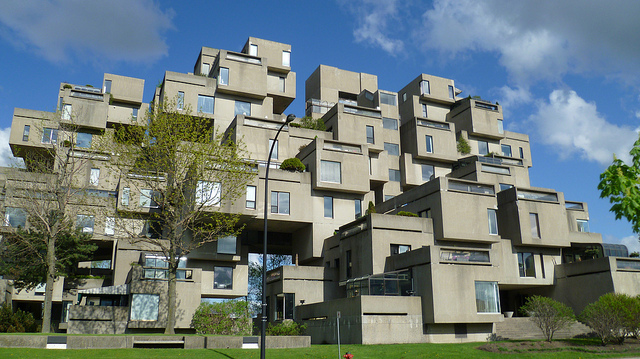
Habitat67
Habitat 67, an iconic example of Brutalism

Brutalism is the spawn of a war torn Europe. Following the decimation of countless civilian homes, businesses, and institutions there arose a need for these things to be resurrected as quickly, and as cheaply, as possible. What could be cheaper than unpainted concrete? What could be cheaper than mass-producing boxes made from the stuff, a one-size-fits-all solution to building structures with a wide variety of use? Thus Brutalism became the preeminent style for much of the two following decades, before falling into disregard as being truly hideous and loathsome.

The way the name came about is something that has a little bit of debate surrounding it, but it’s also not particular interesting so I’ll only touch on it briefly. Apparently a Swedish architect used it to describe a house designed by some of his fellow craftsmen, and the term caught on to describe the new wave of architecture defined by sharp angles and striking simplicity. Though this is widely considered the beginning of the term, I find it interesting that the house the architect was talking about, Villa Göth, was made of brick and had a regular triangular roof, two things which are an exception, rather than the norm, to the Brutalist style.

Villa Goth
The unremarkable Villa in question

Personally, I wouldn’t call it Brutalist at all. Just because it’s a bland square does not allow it to take on the mantle. Another theory is that the name comes from the French words for raw concrete, “béton-brut”. Concrete itself is the defining material of Brutalist architecture, but this also seems a bit too convenient and far-fetched to me to be the answer. However, the truth may very well be that one or both of those terms were the genesis of the name- but it doesn’t matter. Either way, let’s get back to the main focus of this article: crazy buildings.

Origin of the name aside, it can’t exactly be said that Villa Göth is Brutalist in nature or design. So what would early examples of real Brutalism be? Well, there is one building, or more accurately a series of almost identical buildings, that are considered to be the definition of early Brutalism. Even today they are held up as a prime example of its raw and striking style.

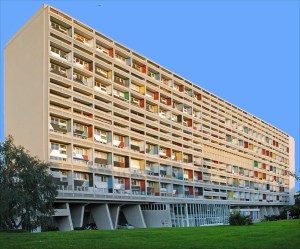
Unite Berlin
Berlin’s colorful Unité d’habitation

Built by the French architect Le Corbusier in the fifties and sixties,  the buildings known simply as Unité d’habitation were made to be cheap, working-class housing for families displaced after World War II. Steel proved to be too expensive to use for its frame and thus Le Corbusier turned to the inexpensive béton-brut as a suitably strong and reliable replacement. Initially completing construction of the first one in Marseilles, 1952, he saw four more arise over the next decade. “Le Corbusier thought that high rise buildings could be used to create spacious city homes with the same amenities as a typical street” (source: dezeen.com). It was this design that inspired other architects to experiment with concrete as a medium for stripping down structures to their essence to provide new, exciting ways to build functional and cheap works of art. The important things to notice about Unité are its colorless concrete, lack of any curves, and small, claustrophobic windows.

To interject my own thoughts for a moment, while researching for this post I found a surprising lack of articles and architects talking about Brutalism’s clear Soviet influences. All sources point it out to be a style dominated and defined by French and English artists, which to me is crazy when you look at the communist buildings in formerly USSR controlled territories. To be fair, they are mostly built in the 1970s and 80s, so the builders weren’t early adopters or ones who defined the style. It wasn’t easy to find the names of the Soviet architects who built them either, which may be due to the culture of the country at the time. Perhaps you weren’t allowed to take credit for your own work in Russia unless you were a murderous dictator. Even so, I think that Russia was the country that most fully embraced Brutalism and poured out some of the most iconic and definitive works related to it. Observe:

This slideshow requires JavaScript.

(Annoyingly the only picture or even reference I could find to the super-cool Het Poplakov Cafe was that image in various design articles. I’ll trust that it’s real though.)

Going back to the famous Brutalist artists, Le Corbusier’s work became popular with his contemporaries, and many British architects decided to take the style and run with it. A pair of British architects, dynamic husband and wife duo Peter and Alison Smithson, latched on to the crazy new theme and took it to new heights. Once again, the recent war had a huge effect on them as well. The New York Times Style Magazine stated “For a world still climbing gingerly out of the ruins of World War II, in need of plain dealing and powerful messages, this brand of architectural honesty was refreshing” (source).

The Smithsons created some remarkable buildings, as they were very talented architects who caught the eye of critics and communities early in their twenties. They designed stripped-down and simplistic modernist buildings – like the Hunstanton School (still in existence today as a high school), an early work which foreshadowed the direction that they would continue to take with their art.

Hunstanton School
The fairly hideous Hunstanton School

While even I have to admit it’s pretty bad, it was a huge success at the time and a springboard for the Smithsons’ careers. As their business continued to expand, it was evident that they were not only inspired by Le Corbusier but they also were helping to define the intrinsic principles of the emerging Brutalism.

Their career did not have a fantastic end, sadly. In the 1970s they built a housing complex that they hoped would successfully “combine the community of the Victorian slums with the efficiency and density of Le Corbusier’s housing blocks” (source: archdaily.com). Unfortunately the building had numerous structural problems and maintenance issues, and was recently completely demolished in favor of a new wave of housing. The fact that it fostered a high amount of crime due to the location and poverty of its residents only served to further harm its image, which is all it took for the public to lose faith in the Smithsons. Nevertheless they were absolutely instrumental in shaping and defining the Brutalist style. There were many other excellent artists similar in vision to Le Corbusier and the Smithsons, but for brevity’s sake I will encourage you to look up some of them on your own if you want to learn more about the brains behind the Brutalist buildings: Walter Netsch and Gottfried Böhm have some interesting work.

Now after all that, you would expect this style to have died a quiet death, buried deep in the ground at a funeral ceremony no one went to. And you wouldn’t be wrong for expecting that. Vilified for so long, Brutalism was believed to have no place in the portfolios of modern, progressive architects. Like Millard Fillmore, its reign was short and unremarkable, dying around the 70s or 80s, depending on who you ask.

Interestingly enough, however, in recent years there has been something of a revival of appreciation for the style. Many of the remaining Brutalist buildings still in use are getting to the age where the question of renovation or even demolition comes up. Brutalist monuments and statues, long left to decay, are now seeing individuals stand up and claim that they should be properly maintained and preserved as relics of an important time period in art history. “Preservationists clamor for their survival, historians laud their ethical origins and an independent public has found beauty in their rawness.” (source: nytimes.com).

Robin Hood Gardens.jpg
Robin Hood Gardens, the Smithson’s not-so-successful mass housing project. Credit: Steve Cadman, Flickr

While it is still rare to see the style even have a hint of influence in modern architecture, and we may never again see new works outside of avant-garde artists looking to be different, I think the fact that people having an open mind to the potential beauty of Brutalism is enough. It gets a lot of hate when in truth it was a very daring departure from the traditions of its time, and not a bad one at that. I have often found myself starting at crazy looking, absolutely one-of-a-kind buildings with great interest and wonder. Invariably, these are Brutalist in nature. As I mentioned before, they may not have the celestial beauty of Gothic churches or Art Deco monuments. But in my opinion, no buildings vary so much in design while working with such a small variety of materials, as Brutalism. Fortunately, others agree and wish to preserve these artworks. As the New York Times so excellently puts it: “Architectural fashions go in and out of style with disorienting alacrity. What is one era’s style is the next era’s eyesore, and in the midst of a demolition binge, a new generation learns to appreciate, often too late, what is disappearing” (source).

My interest in Brutalism mirrors its rebirth from the ashes of the late 20th century. When I first saw the style, without knowing its name but knowing it was related to ugly utilitarian Soviet designs of yesteryear, I had no use for it. Its in-your-face presentation clashed horribly with the muted and humble plain concrete bones, and I had no use for it. All the buildings looked the same, they were all boring, and lacked any of the creativity and majesty you could find in beautiful churches and towns built centuries earlier. How could we have taken a step, or maybe even several jumps, backward? Clearly the architects were just trying to be innovative and counter their fellow artists who were focused on decoration, facades, and form-over-function.

Well that may have been the case, but it was also the case that my opinions changed as I learned more about Brutalism and saw more examples of the style. It slowly began to intrigue me how easily identifiable the style was. No matter how crazy the building, no matter if it was a vast city hall or a small set of statues, the unmistakable simplicity of design and plain béton-brut instantly gave away their inspiration. I realized that there is a vast variety of ways architects expressed themselves by using this incredibly honest style. And suddenly I realized I didn’t mind it so much.

I can’t say I find the style ugly. Like everything, I believe it has a proper place and utility. Some things, like churches, town halls, and playgrounds should never be Brutalist. However, skyscrapers, office buildings, and housing complexes can make exceptionally good use of the style. Some visionaries can push the style beyond its limit and create some truly attractive pieces like the earlier shown Habitat 67. I would hate for the style to disappear altogether so I am glad it is seeing a small revival.

It’s not hideous. But I can’t say it’s beautiful either. A dilemma. How can a style not be ugly but not be attractive either? Well that attribute is something I find unique to Brutalism. It’s plain, open, and is an unpretentious expression that exudes the phrase “what you see is what you get.” I find it refreshing, and while I wouldn’t want to see it everywhere, I do believe it has a place in the world and can make for some truly thought-provoking, admirable artworks.

VERDICT: Not Ugly

FFITHW: The Cobra Effect

I have a passion for learning names of social phenomena that are fairly obscure and relatively unknown. Famous examples of this would be Murphy’s Law or the Streisand effect. However it’s the lesser known terms that I adore hearing about, because I love having that “Man, I never thought about that, but it makes sense!” moment.

Cobra
“Sssssssssssssssssss” -This cobra, probably

The cobra effect sparked that reaction in me when I first heard of it. Stealing the definition from its Wikipedia page, it “occurs when an attempted solution to a problem makes the problem worse, as a type of unintended consequence.” Just like the time I sat down to write a FFITHW post because it would be quick, but then spent hours rewriting it to fit into the word limit, the cobra effect means your plans backfired horribly.

The term was coined by an economist named Horst Siebert, probably because he thought it sounded better than “perverse incentive” which means the same thing. He used it to describe the bad things that can happen when someone incentivizes groups or individuals to perform tasks for them. Case in point:

When the British Empire ruled India in the 1800’s, the country was overrun by deadly cobras. Deciding that the local population would handle this problem with efficiency, the government offered a bounty on each dead cobra that was brought to them. It seemed like a good plan. Unfortunately, some crafty individuals began breeding cobras in order to maximize their profits, causing a large upswing in the cobra population. Once the government caught on and reacted by ending the rewards, the breeders simply released the snakes, resulting in a cobra problem much worse than at the start.

The moral of that story? Don’t pay other people to do work for you – they’ll scam you.

Writer’s Block – An Indescribable Curse

“So we beat on, boats against the current, borne back ceaselessly into the past.”                                                            F. Scott Fitzgerald

Well, hello again. That’s right, it’s been a while. I only managed one post since my last promise that I would update this blog regularly. And it was almost two years ago! I can only offer yet more inadequate excuses and apologies. What am I pointing the finger at this time?

Writer’s block.

Go ahead, laugh, but it’s true. During my fairly intense senior year of college I lost almost all motivation to do anything creative. All I had to focus on were useless exams, pointless projects, and the inescapable feeling that my life wasn’t going the way I wanted it to.

Not that I was feeling depressed. More like ambivalent towards life in general. I sank into an apathetic state where the only thing that mattered was getting through one more day with as little effort as possible. I’d been swarmed with so much schoolwork, and real work, that I simply couldn’t put forth the effort to care about anything else. I just went with the flow and told myself I’d do something worthwhile tomorrow, I’d finish the articles in my drafts next week, I’d make the most of my last year of college every day until graduation.

Looking back on it now, I certainly wish I had done those things, but it wasn’t realistic. I simply had too much going on, and while I don’t think the year could have really gone much better, I still feel that unavoidable nagging feeling that I could have continued writing if I’d tried a little harder. Maybe, maybe not. I didn’t feel capable of it at the time.

After graduation I went out into the workforce like so many other fortunate ex-students and became a student of the intimidating real world experience. I have learned a lot over the past year (almost) and I continue to grow in many ways. However, the one thing I always had in the back of my head was “why don’t you get back into writing?” The thing I love enough to be a hobby but don’t hate enough to make a career.

Today, a Saturday morning almost an hour after midnight, I’m taking that first step. I’m recalling the fun times I spent writing in my youth (which I still have, gol’ durnit) and returning to it so I can feel the same peace of mind I had when I wasn’t too busy to sit down for a few hours and hammer out an article about a new cool thing I discovered.

I’ll try to keep it up, something I’ve said a thousand times, but the advantage of having a salaried office job is that I have weekends off, which means a regular, guaranteed amount of free time to focus on the things I love.

So most of my attention will go to the Rose, naturally (love you, sweetie!). But maybe, just maybe, I’ll clear out my drafts folder and write some intriguing new stuff for you all.

Time will tell.

FFITHW: How to English Good

How often do you think about adjectives? All the time? Every day? Do you love them? Do you dream about big red unusual German fluffy adjectives?

bigredfluffyadjective

Trick question: you can’t. However, you can dream about unusually big fluffy red German adjectives. I suppose. I don’t know how, but…

Anyway, an interesting thing I recently learned is that in the English language, word order matters. Okay, I didn’t just learn that, it’s fairly obvious and something we all know. But were you aware that when describing an object using two or more adjectives, those adjectives have a preordained order that you must use them in?

Well, you might have known that. I didn’t. It’s something that we probably all understand subconsciously; take the sentence in the first paragraph. Does it sound right when you say it out loud? Probably not. The second paragraph just flows so much better, and it’s easier to understand the properties of the adjective. If an adjective could be fluffy, or German.

So what is this all-important word order? Well, to quote the Cambridge Dictionary website, “Adjectives which describe opinions or attitudes usually come first, before more neutral, factual ones.”  Specifically, the order goes like this:

  1. Opinion (adorable, strange)
  2. Size (small, massive)
  3. Physical Quality (fluffy, squishy, rubbery)
  4. Shape (square, boxy, oblong)
  5. Age (young, youthful, elderly)
  6. Color (red, blue, monochromatic)
  7. Origin (German, Finnish)
  8. Material (stone, brick, gelatin)
  9. Type (three-cornered, general-purpose)
  10. Purpose (cooking, building, washing)

Try it yourself, make up a sentence with lots of adjectives and then see if you instinctively got them in the right order. You probably did, without having to think too hard. This rule can be shaken up if you want to emphasize one particular adjective over another, in which case you’d put it right before the noun. Otherwise, this is how you’d put the descriptive sentence together.

Now you’re an adjective master! …Maybe.

Back Again (Again)

“Some inspirational quote about comebacks”                                                                                                                                Anonymous

Hey, it’s me! Forgotten all about Cineri, hadn’t you? Well, after losing my computer to a deadly crash a couple months ago my blogging was put on a temporary hold. Now that I’m back up and running with a new and improved blogging device I’ll be able to deliver the premium visual content you’ve all been craving so desperately. I’ll see you soon, so don’t go too far!

Fuggerei

Imagine living in a picturesque German village with beautiful two story cottages all around. Imagine that it was founded nearly five hundred years ago, in 1520. It has a population of about 150 and has its gates closed promptly at 10 PM, by a watchman who protects the town until the gates are re-opened at 5 AM. Now, imagine the cost of renting a single apartment in one of those cottages. Go on, guess.

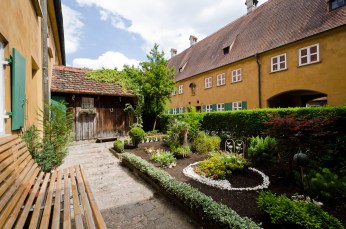
Wrong. Guess again. Still wrong. This place is actually quite real. Here’s a picture of some flats to help you estimate the cost of living.

fugger webauftritt
source: Fugger.de

The town of Fuggerei, located in Augsburg, Germany, is exactly the sort of idyllic, rustic getaway we pictured. It sits about 50 miles west of Munich, and looks pretty sweet to live in. Especially because the cost of rent hasn’t changed since the town was founded. That’s right, the yearly rent is… $1. Oh, and you have to say three prayers for the founder of the town, every single day.

Well, .88 Euros to be exact, but that’s about the equivalent value. The three prayers? I don’t know their exchange rate. Now for the important question: How on Earth is this cheap cost of living possible?

To answer that question, we have to go back to the time of Fuggerei’s founding. It was established by a phenomenally wealthy Catholic banker name Jakob Fugger. Not the greatest name, but he didn’t care about that, since his nickname was Jakob Fugger the Rich.

Fugger_by_Dürer
Jakob Fugger, by Albrecht Dürer

This guy was loaded. He and his family built a merchant and banking empire that spread throughout Europe, making sure to be involved wherever money changed hands. Jakob funded monarchies, bought elections, and even minted currency for the Vatican. Clearly a pretty powerful guy.

To make a long story short, money was never really a problem for Jakob Fugger the Rich. However no matter how wealthy you are, when the cold hands of death start reaching for you, you’ll start to get scared. Later in life, he turned to many philanthropic pursuits. He funded some churches and chapels, but his coolest project by far was the Fuggerei. A town for the more impoverished citizens of Augsburg, who had fallen on hard times and needed places to live.

In fact, the requirement to be a resident of one of the Fuggerei’s modest apartments is the same today as it was at its founding: “one must have lived at least two years in Augsburg, be of the Catholic faith and have become indigent without debt. (Wikipedia)” Back in the day, applicants had to prove their denomination by showing written evidence of their last confession. Not too bad, though I couldn’t find out if there are any openings at the moment for new residents. I’m guessing not. If there were though, I’ve got the indigent without debt part down pretty well, so if I could just make it to Germany and be homeless for two years…

Anyway, the town was initially subsidized by the interest that was earned from a large lump sum endowment. It earned enough interest that the town was kept afloat without even having to touch the original investment. Nowadays interest rates aren’t quite what they once where, so the Fugger family has had to turn to other means of ensuring the Fuggerei will remain cheap housing for impoverished Catholic citizens. Ever since the 18th century, according to the foundation’s website Fugger.de (an absolutely fascinating website to explore if you have the time), the town’s funding is provided by strategic investments in the forestry industry. Donations are also welcomed, and the fees earned by the millions of tourists that come to visit the Fuggerei every year help too. Side note: The fees per visitor are four times the yearly rent for a resident, or four bucks. Price gouging, amirite?

fugger webauftritt
Garden of one of the Fuggerei’s apartments

The town has a long and fascinating history, though it took quite a bit of damage from bombings in World War Two. It has long since been rebuilt in the original style though, and over the years has even been expanded to fit more houses and amenities. As an interesting parting side note, Fugger actually made a saint one of the partners in the family firm, to bless his charitable foundations like the Fuggerei. Full quote from the site:

Jakob Fugger designated an account in the firm (also on behalf of his deceased brothers) in the name of Augsburg’s patron saint, St. Ulrich, which was provided an endowment of 10,000 florins. It guaranteed 500 florins in interest yield annually for the foundations. Thus, St Ulrich, who was canonised in 993, became a partner in the firm. The concept behind this: A saint as an account holder was meant to bring blessings for the firm’s work. In addition, the church only sanctioned interest collection of 5%. Within this framework, it was possible to increase the endowment with a good conscience. Including a saint in one’s firm was based on precedents in Italy and was practiced by many other German benefactor families.

Neat, huh? Well whatever Fugger did to preserve his little town worked splendidly, as it’s a huge part of the tourism trade in its city of Augsburg. If you ever travel to Germany be sure to visit, and then tell me all about it. Until then, I’ll talk to you all next episode of Cineri Gloria Sera Venit!