

Imagine living in a picturesque German village with beautiful two story cottages all around. Imagine that it was founded nearly five hundred years ago, in 1520. It has a population of about 150 and has its gates closed promptly at 10 PM, by a watchman who protects the town until the gates are re-opened at 5 AM. Now, imagine the cost of renting a single apartment in one of those cottages. Go on, guess.
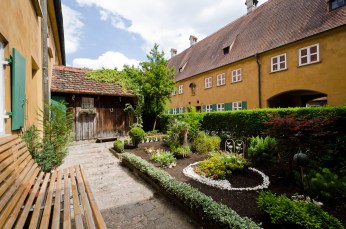
Wrong. Guess again. Still wrong. This place is actually quite real. Here’s a picture of some flats to help you estimate the cost of living.

The town of Fuggerei, located in Augsburg, Germany, is exactly the sort of idyllic, rustic getaway we pictured. It sits about 50 miles west of Munich, and looks pretty sweet to live in. Especially because the cost of rent hasn’t changed since the town was founded. That’s right, the yearly rent is… $1. Oh, and you have to say three prayers for the founder of the town, every single day.
Well, .88 Euros to be exact, but that’s about the equivalent value. The three prayers? I don’t know their exchange rate. Now for the important question: How on Earth is this cheap cost of living possible?
To answer that question, we have to go back to the time of Fuggerei’s founding. It was established by a phenomenally wealthy Catholic banker name Jakob Fugger. Not the greatest name, but he didn’t care about that, since his nickname was Jakob Fugger the Rich.

- Jakob Fugger, by Albrecht Dürer
This guy was loaded. He and his family built a merchant and banking empire that spread throughout Europe, making sure to be involved wherever money changed hands. Jakob funded monarchies, bought elections, and even minted currency for the Vatican. Clearly a pretty powerful guy.
To make a long story short, money was never really a problem for Jakob Fugger the Rich. However no matter how wealthy you are, when the cold hands of death start reaching for you, you’ll start to get scared. Later in life, he turned to many philanthropic pursuits. He funded some churches and chapels, but his coolest project by far was the Fuggerei. A town for the more impoverished citizens of Augsburg, who had fallen on hard times and needed places to live.
In fact, the requirement to be a resident of one of the Fuggerei’s modest apartments is the same today as it was at its founding: “one must have lived at least two years in Augsburg, be of the Catholic faith and have become indigent without debt. (Wikipedia)” Back in the day, applicants had to prove their denomination by showing written evidence of their last confession. Not too bad, though I couldn’t find out if there are any openings at the moment for new residents. I’m guessing not. If there were though, I’ve got the indigent without debt part down pretty well, so if I could just make it to Germany and be homeless for two years…
Anyway, the town was initially subsidized by the interest that was earned from a large lump sum endowment. It earned enough interest that the town was kept afloat without even having to touch the original investment. Nowadays interest rates aren’t quite what they once where, so the Fugger family has had to turn to other means of ensuring the Fuggerei will remain cheap housing for impoverished Catholic citizens. Ever since the 18th century, according to the foundation’s website Fugger.de (an absolutely fascinating website to explore if you have the time), the town’s funding is provided by strategic investments in the forestry industry. Donations are also welcomed, and the fees earned by the millions of tourists that come to visit the Fuggerei every year help too. Side note: The fees per visitor are four times the yearly rent for a resident, or four bucks. Price gouging, amirite?
The town has a long and fascinating history, though it took quite a bit of damage from bombings in World War Two. It has long since been rebuilt in the original style though, and over the years has even been expanded to fit more houses and amenities. As an interesting parting side note, Fugger actually made a saint one of the partners in the family firm, to bless his charitable foundations like the Fuggerei. Full quote from the site:
Jakob Fugger designated an account in the firm (also on behalf of his deceased brothers) in the name of Augsburg’s patron saint, St. Ulrich, which was provided an endowment of 10,000 florins. It guaranteed 500 florins in interest yield annually for the foundations. Thus, St Ulrich, who was canonised in 993, became a partner in the firm. The concept behind this: A saint as an account holder was meant to bring blessings for the firm’s work. In addition, the church only sanctioned interest collection of 5%. Within this framework, it was possible to increase the endowment with a good conscience. Including a saint in one’s firm was based on precedents in Italy and was practiced by many other German benefactor families.
Neat, huh? Well whatever Fugger did to preserve his little town worked splendidly, as it’s a huge part of the tourism trade in its city of Augsburg. If you ever travel to Germany be sure to visit, and then tell me all about it. Until then, I’ll talk to you all next episode of Cineri Gloria Sera Venit!


Wow! Where on earth do you find these uber cool items? –you see what I did there? I would never have known about this otherwise. Thanks!
LikeLike