The Bermuda Triangle. Everyone’s heard of it, everyone knows its reputation. A mysterious section of ocean that has a penchant for swallowing ships and aircraft alike in its insatiable hunger. Unexplainable disappearances are on the menu every day at the Triangle, and by golly the Atlantic Ocean is ready to deliver.
But how many of the terrifying rumors that surround this three-pointed enigma are true? For how long have these supernatural events been going on? Can modern science finally explain the legend of the deep?
Well yes it can, and studying up on this phenomenon was quite interesting for me. Like most people, I’ve heard tales of the Bermuda Triangle ever since I was little, but other than their increasing my desire to never get on a boat in waters deeper than my local pool I didn’t pay much attention to them. However, recently I decided to do some diving into the lore surrounding the zone and see what today’s maritime opinion on it is.
The first thing to explain is the geography, and with it, the first known mention of the Bermuda Triangle in print. Its apparently unusual effects and rough dimensions were laid out by a reporter for the Miami Herald in 1950. In the article he wrote he made many claims, among continuous mocking of the modern-day belief of a “small world,” of several unexplained disappearances of commercial ships and airlines within the boundaries of Bermuda, Puerto Rico, and Miami.

In this map we can see the lines that would form the boundary of the Triangle. Though Edward Van Winkle Jones (who had really mean, folk-tale loving parents apparently) never actually gave it the name “Bermuda Triangle,” his article clearly inspired all the writers and sensationalists who came after, reveling in the sense of mystery and terror exuded by this patch of ocean. It’s a pretty entertaining piece as well, and short. Really instills a little bit of fear in you and I bet it made more than a couple people rethink their travel plans that year. But let’s be honest, I doubt any travel over thousands of miles of ocean was safe in the ’50s. Between the choice of a Douglas DC-3 or a rusty bucket more prone to sinking than the Titanic I would probably gladly pick a raft built out of rocks by the Flintstones.
Knowing where the three vertices of this area of doom lie is only half the story though. We want to hear more about these disappearances. If there really has been a disproportionate number of flights and fleets gone without a trace, then perhaps there really is something to these rumors after all.
The actual phrase “Bermuda Triangle” was coined in 1964 by William Gaddis in his article “The Deadly Bermuda Triangle“, written for a popular pulp fiction magazine. Obviously his job was to sensationalize the already bizarre rumors so I certainly took his claims with a grain of salt. The article reads like a Lovecraftian tale of intrigue, with fanciful lines and grand claims like “The mysterious menace that haunts the Atlantic off our southeastern coast had claimed two more victims. Before this article reaches print, it may strike again” and “During the past two decades alone, this sea mystery at our back door has claimed almost 1,000 lives.” If E. V. W. Jones made the place sound scary, Gaddis makes it sound like the gates of Hell are waiting in the ocean to swallow you up.
Despite his hamming up the dangers of the Devil’s Triangle, as it is also known, he still brings up some fairly well-documented accounts of strange disappearances that to this day remain unexplained. The vanishing of Flight 19, a group of five bombers embarked on a routine training mission in 1945, is probably the most famous and often referenced mystery tied to the Triangle. Long story short, these planes were practicing flying with certain navigational restrictions that required the airmen to rely more on visuals than mechanical instruments.
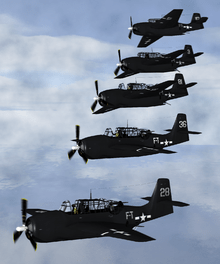
Though the exercise was supposed to be short and take place off the coast of Florida and the Bahamas, some kind of navigation failure resulted in the planes losing all sense of direction and resulted in their eventual crash landing into the ocean some several hundred miles above their intended operating area. Because no wreckage or bodies were ever recovered, the fact that a rescue plane sent out after them also disappeared, and strange reports by the pilots stating that they were receiving unusual compass readings, those who read about the story could only chalk it up to supernatural events. Though an investigation launched by the navy turned up nothing substantial, it was determined that the flight leader had misidentified the Florida Keys and turned the flight in a direction that he thought was towards the mainland, but was in fact farther out to sea.
Another tragic disappearance happened in 1918 to the USS Cyclops and its crew of approximately 300. A cargo ship, the Cyclops was carrying ore from Brazil to Maryland on a non-stop journey. Interestingly, it made an unscheduled stop in Barbados after the ship seemed to be overloaded and too close to the maximum acceptable water line. After departing Barbados it would have had a course set to pass directly through the Bermuda Triangle before reaching its final destination, but neither the ship nor a single member of the crew was ever seen again.
Of course this event can be attributed to structural, mechanical, or navigational failure as well, though proof is impossible to find thanks to the lack of any trace of evidence. Once again this led to wild speculation. Perhaps this area of the ocean was possessed, somehow inherently more dangerous than every other part of ocean covering the planet. This immediately brought the question to my mind: Is the rate of disappearances and wrecks greater than that found elsewhere?
To answer this, I turned to Google. Unfortunately I couldn’t find any hard numbers as to the ratio of Triangle disappearances to disappearances in similarly-sized areas worldwide, but I did turn up several articles that claimed there was no greater amount of missing flights and ships than anywhere else. However, I demand facts. In lieu of facts, I searched for official government statements. The National Oceanic and Atmospheric Administration seemed like a good place to go, and there I went. They maintain that weather and human error are the cause of most issues in the Triangle, like pretty much anywhere else in the world. “The majority of Atlantic tropical storms and hurricanes pass through the Bermuda Triangle” they say, as well as pointing out that a large number of small islands in the area can cause unusually shallow areas for ships to run aground on. Poor navigation would have been par for the course in the early 20th century. No wreckage appearing is not unusual, as sometimes boats and planes sink completely to the bottom of the ocean, along with their crew and cargo. With an area estimated to be in the ballpark of 1,000,000 square miles, the Triangle encompasses so much ocean that it’s only to be expected that such a high traffic area would have lots of wrecks. I would imagine other common shipping routes also are just as dangerous, an assertion also backed up by myriad semi-reputable articles.
In the end, no government organization or scientific journal backs up the existence of the Bermuda Triangle and its reputation. Only in pulp fiction and clickbait articles will you find people taking the supernatural threat seriously. While it is entertaining to read these spooky stories, they remain just that: tall tales told to terrify and sell cheap magazines. The wrecks and disappearances may have a foundation in truth but are often quickly blown out of proportion and embellished.
Regardless, it’s all fascinating stuff. I think everyone has an inherent interest in the unknown, which is why stories like the Bermuda Triangle are so interesting. We kind of want to believe in powers beyond our control, shiver at scary stories, and think that maybe the world is more interesting and inexplicable than scientists would have us believe. The truth is sometimes just as interesting though, and it was definitely cool for me to finally learn the truth behind this long-standing legend. I hope you feel the same. I’ll leave the final summary up to our friends at the NOAA as, very rarely, government publications can state things in eloquent and succinct ways.
The ocean has always been a mysterious place to humans, and when foul weather or poor navigation is involved, it can be a very deadly place. This is true all over the world. There is no evidence that mysterious disappearances occur with any greater frequency in the Bermuda Triangle than in any other large, well-traveled area of the ocean.








 Cineri Gloria Sera Venit