Recently, in my trawls across the vast ocean we call the internet, I came across something actually interesting from National Geographic. I know, I thought they ceased to exist when people stopped collecting their drab yellow magazines as well.
It was a beautifully crafted site that slowed the processor of my aged laptop that I first tried to view it on to a crawl. After retiring to my study and firing up my somewhat beefier desktop, I was greeted by the sight of over 200 objects that orbit the planets in our solar system. Yes, dear reader. I’m talking about moons.
Too see what I’m talking about instead of having me recite the contents of the web page to you, click the following link:
https://www.nationalgeographic.com/science/2019/07/the-atlas-of-moons/
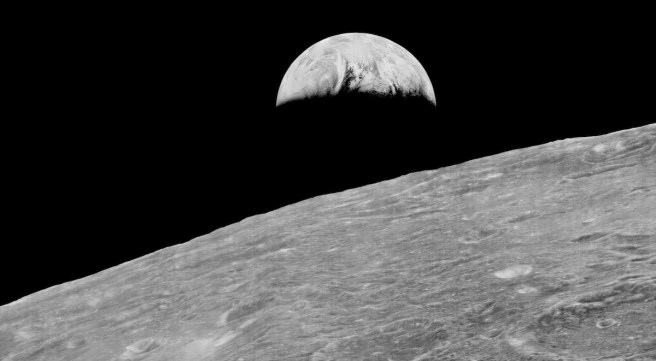
The moons of all nine planets (Pluto, are you back in??) are available for your viewing pleasure, though not all the planets have moons. Mercury and Venus do not have any moons at all, though their embarrassing lack of orbiting space rocks is more than made up for by behemoths like Jupiter and Saturn, who have 79 and 82 respectively. Interestingly, the Earth is the only planet with a single moon. I think it would be pretty cool if we had two, like less bright suns of Tatooine from Star Wars, but I suppose it’s better than none at all.
Scrolling down through the site allows you to view each planetary system in detail, beginning with Earth. Visual representations of moons revolving their planets appear interspersed with miscellaneous trivia you can use to impress, or bore, your friends. You can even view fully manipulable 3D images of the moons, allowing you to see every crater and mountain in detail.
There’s a lot of fascinating info there, the site is truly a work of art. It really makes you feel how truly vast the planets and their moons can be. The ability to superimpose the USA onto the moons to realize their scale is a nice touch. Europeans, sorry. No frame of reference for you.
After viewing your moon of choice, and if you’re like me you’ll choose a lot of them, Nat Geo puts some tags that relate to some unique traits of the moon. For example our moon has “Odd Composition”, “Odd Origins”, and “Atmosphere”. Clicking on these will show other moons in the solar system that have those traits. I didn’t know our moon had an atmosphere, assuming that it simply floated like an oversized arrogant asteroid in space, but that’s not the case. Not all moons have one, of course. Why? Well, that could be a blog post all on its own.
Another cool thing they’ve got is an infographic on the various moon landings that have happened, telling you dates, country of origin, and whether or not the spacecraft was manned or not. The moons of planets besides Earth have no manned landings, yet. Fingers crossed for a trip to another one so that Matthew McConaughey can be relevant again in a much-anticipated Interstellar 2.
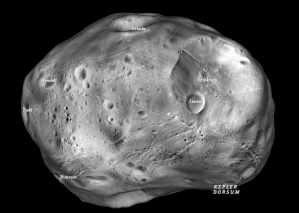
Continuing the perusal of the site leads you to Mars and its two moons, and so on and so forth. Interestingly, the moons of Mars (and many other planets) are not spherical in shape at all, instead looking more like asteroids, or as Nat Geo describes, “ruddy space potatoes.” Seems a little harsh. I mean, they aren’t wrong, but moons have feelings too!
Scrolling through Jupiter is fascinating as you get to see the orbit of every one of its 79 moons (four major, seventy-five minor). The overall chart looks like some kind of demented scribble with ovular orbit paths overlapping endlessly over one another. It’s apparent astronomers just kind of gave up on naming the moons, since some have sweet monikers like Harpalike, Thelxinoe, and Euthanes, and then you run into a stream of ones called things like S/2003 J 18. Don’t worry, there are only in-depth infographics on the major moons, so you don’t have to scroll through a wack list of identical, boring semi-asteroids that got lucky enough to orbit instead of crashing into a planet’s surface.
The site continues in this manner, highlighting points of interest about the various moons and providing additional background information on how we suspect they were formed, how old they are, etc. All in all it was a pretty entertaining half hour journey, being the moderately curious person that I am, and it was cool to get to take a closer look at the more overlooked celestial bodies of our solar system. Please, check the site out yourself and let me know some of the interesting things you learned about moons!
As a farewell, here is a bonus, super HD gif of a full rotation of Earth’s very own, incredibly lazily-named moon: The Moon.
https://gfycat.com/perfecthoarsedobermanpinscher


I’m here to tell you people still collect National Geographic…
LikeLiked by 1 person
Some people stockpile precious metals as an investment, others hoard those sweet golden copies of Nat Geo.
LikeLiked by 1 person