
No, I didn’t mean for that to sound like a catchy jingle.
Man, heavy topic today, so put your thinking caps on. We’ll be taking a stroll through the beautiful gardens of our deoxyribonucleic acid sequences, so come on and join the party! If we’re lucky, we may even get to find out how fireflies get their fire, and whether or not we can make humans glow in the same way! (but only if you’re good.)
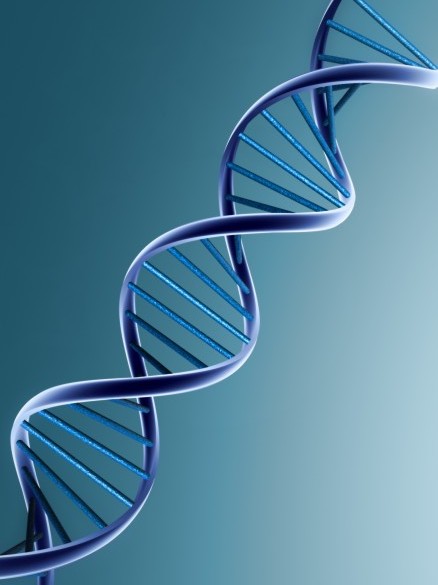
Everyone who’s ever passed a basic biology course knows about DNA. It’s a double helix, the twisted ladder! Two loooooong ropes of nucleotides that have bonded together in a specific way, twisted around in a pretty shape, and folded on top of itself in a hundred different places. But do we really know what all that means?
Until recently, I would have been able to tell you the names of (most of) the parts of DNA, a few facts about it and other assorted trivia. Things that you have to memorize for school but never really think about outside of class. And I’m so sad for that, because now that I’ve looked into it just a tiny bit, I’m blown away by how simply amazing humans and their cells really are. I wish I’d gotten into this stuff years ago.
Think about it. The DNA inside you is what caused every single cell inside your body to be built. Your liver cells, your brain cells, all those skin cells that you rub off a few thousand of every time you scratch an itch- they were all mapped out by a supercomputer known as DNA and created by… your very first cell.
Everything you are, the billions of cells that make you who you are, all came from one cell. I’d hazard a guess that everyone knows this, but take a moment to think about how truly awesome that is. The moment you became alive, you were nothing more than two halves of a cell meeting up and becoming one. But you weren’t satisfied with that. 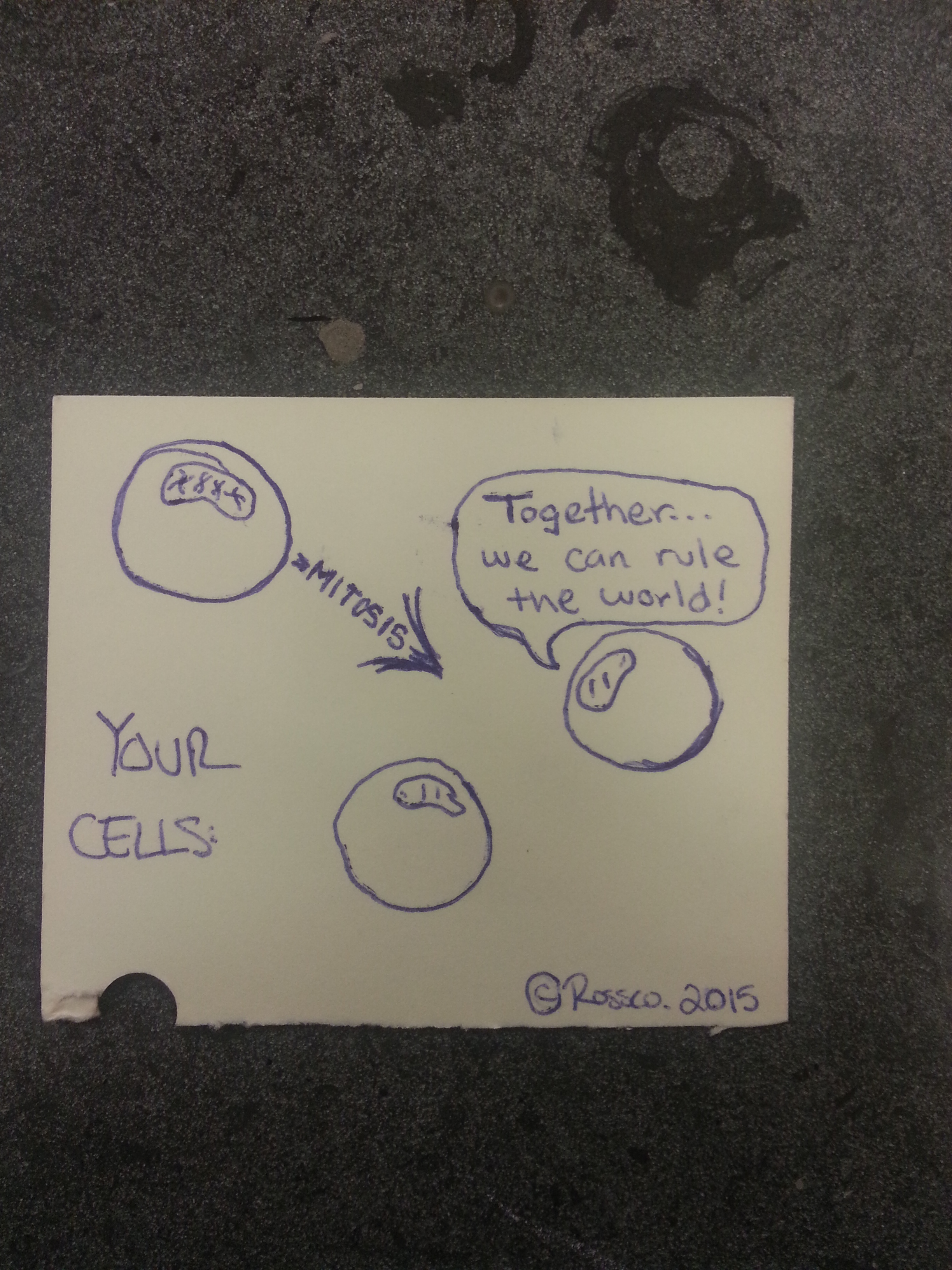 No, you wanted to double your size- quadruple- octuple!- continue growing and making more until you formed your own rough copy of your parents. Don’t ask me why, that seems like a terrible idea. Maybe it sounded good at the time.
Let me take a moment to briefly explain why all this stuff matters. I promise there’s a point to all this boring science. The reason that those cells were all able to become vastly different is because our DNA (and this is important) has the instructions inside of it that tell the cells what to be. Now remember, every single cell you have has the exact same DNA inside it. All of them! Even gametes, though they’re a little different, but that’s a post for another day. Anyway, that’s amazing! You should freak out! Your skin cells have the exact same information inside of them that your heart cells do, and yet they have totally different functions! It’s impossible-to-understand wizardry!
…Or is it?
The question you should be asking yourself is, “What parts of the DNA tell the cell what to do?” And the answer to that is, genes. The textbook definition of a gene is that it is a segment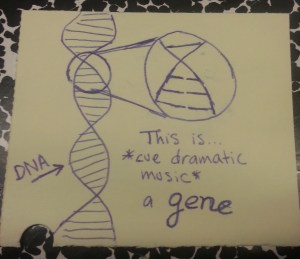 of DNA that codes for a specific trait. It’s several of the nucleotides that form DNA and when it’s activated, it starts producing proteins that give the cell its new purpose. Everyone knows that genes are what affects eye color, height, and other aspects of the body, A.K.A. traits. DNA is the master blueprint for forming exactly who you are, how you are.
Now the answer to that question begs another: If we could somehow discover what genes go to which trait, would we be able to… mess with them?
Of course we can! Through the strategic placing of certain proteins that eliminate specific segments of DNA, we can delete genes that we want gone and study what happens once those genes have disappeared. Even better, this process doesn’t have to be random. Scientists can locate the exact point on DNA where a gene begins, so while they may not know what that gene does, they can certainly delete it and observe what happens in the test subject.
I’m sure your next question is similar to what mine was when I found out how easy (for skilled scientists, anyway) this process is. “What awesome bioengineering have we done to things???”
How about making cats glow in the dark? [here’s a video link to that news story.] Or GMO (genetically modified organism) foods? Curing genetic disorders should be possible too, right? Scientists have been doing this kind of thing for decades (and I do mean only decades, this is cutting edge stuff we’re talking about), but there’s so much we have left to learn. But yes, all of these things are being done because we have the ability and knowledge to do them, and experimenting with it can create some pretty epic things. Who knows, we might even cure cancer one day.
It all starts with DNA. It’s not a magical word that makes people give you mad respect if you can spell it perfectly, it’s not a mystery box that scientists pull random experiments out of and go “hey, that’s neat.” It’s just a string of information that your body reads so that it knows what to do. That’s all. If we re-write some of that information, we can find out exactly how a body reacts. Not magic. Science. And science is understandable, and really, really awesome.
Oh yeah, I promised to talk about fireflies and their Luciferase, didn’t I? Well allow me to save that for another day. Have to have material to keep you all coming back, right? Oh, and if you have any questions, I encourage you to comment them below. I’m still learning all this stuff too, and any more incentives I can get to study it, I’ll take. Farewell my friends, see you next time!
 Cineri Gloria Sera Venit
Just when the car is completely souped up the road map is thrown away! Simply because something CAN be done doesn’t mean it SHOULD be done. Dr. Mengele and all. Just sayin’.
LikeLike
Well Dr. Mengele wasn’t experimenting with genetics, plus that was sixty or so years ago. That might be a post for another day, but suffice it to say scientists aren’t going off the rails Jurassic Park style.
LikeLike